Employee well-being has become an important part of building a successful business. Companies today understand that healthy, motivated employees are more likely to perform well, communicate effectively, and contribute to long-term organizational growth. Workplace wellness is no longer limited to providing medical insurance or arranging an occasional health checkup. 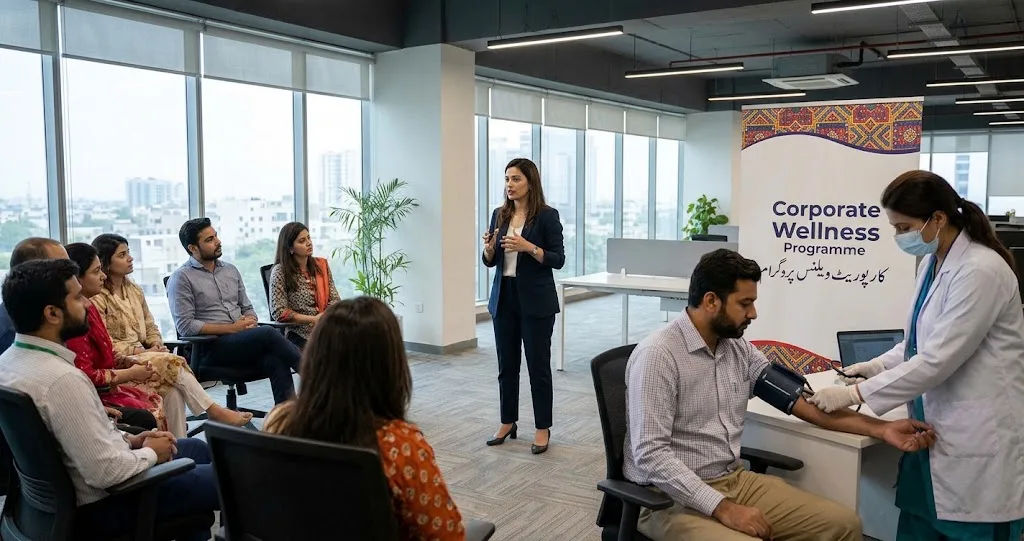 It involves creating an environment where employees can maintain their physical health, manage stress, develop healthy habits, and achieve a better balance between work and personal life.
A corporate wellness programme Pakistan typically includes a range of activities and services designed to improve employees' physical, mental, and emotional well-being. Depending on the company's size, budget, industry, and workforce needs, these programmes may include health screenings, fitness activities, nutritional guidance, mental health support, preventive healthcare, and workplace safety initiatives. Some organizations also introduce flexible working arrangements, employee counseling, and health education sessions.
In Pakistan, workplace wellness is especially valuable because employees may face long commutes, demanding schedules, financial pressures, sedentary work, and difficulty accessing preventive healthcare. A well-designed programme can help employers address these challenges while creating a healthier and more supportive working environment. Understanding the different components of workplace wellness helps businesses choose services that meet their employees' needs.
Corporate Wellness Programmes
A corporate wellness programme is an organized plan that helps employees improve or maintain their health while supporting a healthier workplace culture. It can be developed internally by a company's human resources department or delivered with assistance from healthcare providers, wellness consultants, fitness professionals, and mental health specialists.
The purpose is not simply to encourage employees to exercise. A comprehensive programme considers several aspects of health, including physical fitness, emotional resilience, nutrition, preventive care, and workplace relationships.
For example, a company might arrange annual health screenings, provide access to confidential counseling, organize walking challenges, and conduct workshops about healthy eating. Another organization may focus on ergonomics, stress management, and reducing health risks among employees who spend long hours at desks.
The most effective approach is one that reflects the actual needs of the workforce rather than offering the same activities to every organization.
1. Health Screenings and Preventive Healthcare
Preventive healthcare is one of the most important elements of an employee wellness initiative. Regular health assessments can help employees identify potential health concerns before they become more serious.
Basic Medical Checkups
Companies may organize workplace health assessments that include:
-
Blood pressure measurements.
-
Blood glucose testing when appropriate.
-
Body mass index and weight assessments.
-
Cholesterol testing where clinically indicated.
-
General health consultations.
-
Reviews of personal and family health risks.
The exact tests should depend on employees' ages, health histories, and individual risk factors. Medical professionals should determine which screenings are appropriate instead of automatically requiring every available test.
These services are particularly useful for employees who have limited time to visit healthcare facilities during working hours.
Early Identification of Health Risks
Conditions such as high blood pressure, diabetes, and elevated cholesterol can develop without obvious symptoms. Preventive screening may help identify these risks and encourage employees to seek suitable medical advice.
However, a screening result is not always a diagnosis. Employees should have access to qualified healthcare professionals who can explain results and recommend follow-up testing or treatment when necessary.
A corporate wellness programme Pakistan can incorporate these services through workplace medical camps, partnerships with clinics, or scheduled appointments with healthcare providers.
Vaccination and Health Education
Depending on workforce needs and local healthcare recommendations, employers may also arrange vaccination awareness campaigns or vaccination services.
Educational sessions about preventive care, personal hygiene, sleep, and common health conditions can help employees make informed decisions about their health.
2. Mental Health and Stress Management
Mental health is an essential component of workplace wellness. Heavy workloads, strict deadlines, financial responsibilities, and workplace conflicts can contribute to stress and emotional exhaustion.
Ignoring these issues may affect concentration, productivity, attendance, and relationships between colleagues.
Employee Counseling Services
Employee assistance programmes may provide confidential access to qualified counselors or psychologists. Employees can seek support for work-related stress, family difficulties, emotional concerns, or other personal challenges.
The availability of counseling can help employees address problems before they interfere significantly with their professional and personal lives.
Companies should clearly explain how confidentiality works and ensure that personal counseling information is not routinely shared with managers or human resources staff.
Stress Management Workshops
Workshops can teach employees practical ways to manage pressure and maintain emotional balance.
Topics may include relaxation techniques, time management, mindfulness, effective communication, and recognizing signs of burnout.
Short sessions can be scheduled during suitable working hours so employees can participate without creating additional pressure.
Building a Supportive Work Environment
Mental wellness cannot be achieved through workshops alone. Employers should also examine workplace practices that may contribute to stress.
Unreasonable workloads, unclear responsibilities, bullying, poor communication, and unrealistic deadlines can undermine even the best wellness activities.
Managers should be trained to communicate respectfully, recognize signs of excessive workload, and respond appropriately when employees request support.
3. Fitness and Physical Activity
Physical activity helps support cardiovascular health, muscle strength, mobility, and general well-being. However, employees who spend most of their working day sitting may find it difficult to maintain an active routine.
A wellness programme can make physical activity more accessible without requiring every company to build a gym.
Workplace Exercise Sessions
Businesses may organize short stretching sessions, guided movement breaks, yoga classes, or group exercise activities.
These sessions can be particularly useful for employees who spend long hours working at computers or attending meetings.
Participation should remain voluntary, and exercises should be suitable for different fitness levels and physical abilities.
Fitness Challenges and Walking Clubs
Walking challenges encourage employees to move more throughout the day. Companies may organize team-based challenges, walking groups, or friendly competitions that reward consistent participation.
For example, employees could form teams and aim to increase their daily walking activity over four weeks.
The objective should be to encourage healthier habits rather than embarrass employees who have disabilities, health limitations, or different fitness levels.
Gym Memberships and Fitness Partnerships
Some employers offer subsidized gym memberships or discounts at nearby fitness centers.
Organizations with sufficient space may establish small exercise areas within their offices. Smaller businesses can partner with external fitness providers instead.
A flexible arrangement allows employees to choose activities that suit their schedules, preferences, and physical capabilities.
4. Nutrition Education and Healthy Eating
Nutrition affects energy levels, concentration, and overall health. Employees who regularly skip meals, rely heavily on highly processed foods, or consume excessive sugary drinks may struggle to maintain consistent energy throughout the day.
Workplace nutrition initiatives help employees understand practical ways to improve their eating habits.
Healthy Eating Workshops
Nutritionists or qualified dietitians can explain balanced meals, portion sizes, hydration, and healthier food choices.
Sessions can also address common concerns such as managing blood sugar, reducing excessive salt intake, and maintaining a balanced diet while working long hours.
Advice should be practical and culturally appropriate. Pakistani employees may benefit from guidance involving familiar foods such as roti, rice, lentils, vegetables, yogurt, fish, and lean meats.
Healthy eating does not require eliminating traditional foods. It often involves adjusting portions, preparation methods, and overall meal balance.
Healthier Office Meals and Snacks
Companies that provide cafeterias or refreshments can make nutritious choices easier to access.
Options may include fresh fruit, vegetables, unsweetened drinks, balanced meals, and adequate drinking water.
Employers can also review whether workplace food options rely too heavily on fried snacks, sugary beverages, or oversized portions.
Individual Nutritional Guidance
Some programmes provide consultations with qualified nutrition professionals.
Employees with specific medical conditions should receive individualized advice from appropriate healthcare providers rather than relying solely on general workplace workshops.
5. Ergonomics and Workplace Safety
Workplace wellness should also address the physical environment in which employees perform their duties.
Poor desk arrangements, uncomfortable chairs, inadequate lighting, and repetitive movements can contribute to discomfort and certain musculoskeletal problems.
Ergonomic Workstations
Ergonomics focuses on adapting work equipment and tasks to the needs of employees.
An ergonomic assessment may consider chair height, monitor position, keyboard placement, desk arrangement, and lighting.
Employees who work on laptops for extended periods may benefit from suitable external keyboards, mice, laptop stands, or monitor adjustments.
These improvements can support comfort and help reduce avoidable strain.
Movement Breaks and Posture Awareness
Remaining in one position for extended periods may cause stiffness and discomfort.
Employees can be encouraged to take appropriate movement breaks, change positions, and stretch during the workday.
Posture education should emphasize comfort and movement rather than suggesting that one rigid posture is ideal for everyone.
Occupational Health and Safety
Workplace safety is especially important in manufacturing, construction, transportation, warehouses, and industrial settings.
Wellness initiatives in these sectors may include safety training, appropriate protective equipment, fatigue management, hazard reporting, and access to occupational health services.
The programme should complement applicable workplace safety obligations rather than replace them.
6. Employee Education and Health Awareness
Health education helps employees understand their health needs and make better-informed decisions.
A wellness initiative can include regular seminars, information sessions, awareness campaigns, and educational resources.
Common Health Topics
Depending on employee needs, educational sessions may cover:
-
Diabetes prevention and management.
-
Heart health and blood pressure.
-
Sleep quality and fatigue.
-
Mental health awareness.
-
Smoking cessation.
-
Healthy weight management.
-
Personal hygiene and preventive healthcare.
-
Recognizing warning signs that require medical attention.
Information should come from reliable sources and qualified professionals.
Companies should also provide clear guidance about when employees should seek medical attention rather than encouraging them to self-diagnose based on general educational material.
Digital Wellness Resources
Digital platforms can make wellness information available to employees across different departments and locations.
A company might provide online learning sessions, educational videos, appointment booking systems, or digital wellness newsletters.
These resources are particularly useful for organizations with remote employees or teams distributed across multiple Pakistani cities.
7. Work-Life Balance and Flexible Working
A healthy workplace recognizes that employees have responsibilities beyond their jobs.
Long working hours, unpredictable schedules, and limited recovery time can affect sleep, family relationships, and emotional well-being.
Flexible Scheduling
Where operational requirements permit, employers may offer flexible starting times, adjusted shifts, or hybrid working arrangements.
These options can help employees manage commuting difficulties, family responsibilities, and personal appointments.
Flexibility should be implemented fairly, with clear expectations and consideration for roles that require employees to be physically present.
Leave and Rest Policies
Employees need adequate opportunities to recover from illness, exhaustion, and personal difficulties.
Clear leave policies, reasonable break arrangements, and responsible workload planning can support healthier working habits.
Managers should avoid creating a culture in which employees feel pressured to work while sick or remain constantly available outside working hours.
Preventing Burnout
Burnout prevention requires attention to both individual well-being and organizational practices.
Employers should monitor workload distribution, clarify responsibilities, and make it easier for employees to raise concerns.
A corporate wellness programme Pakistan is more likely to succeed when the organization supports healthy work practices instead of expecting employees to manage every workplace challenge on their own.
8. Financial Wellness and Employee Support
Financial pressure can affect sleep, concentration, and emotional health. In Pakistan, household expenses, education costs, transportation, and unexpected medical bills may create financial challenges for employees.
Financial wellness services can help employees develop practical money-management skills.
Financial Education
Workshops may cover budgeting, emergency savings, responsible borrowing, and basic financial planning.
Employees can learn how to track spending, prioritize essential expenses, and plan for foreseeable costs.
The purpose is to provide useful education, not to make assumptions about employees' financial situations.
Access to Relevant Support
Depending on the organization, employers may provide information about available benefits, insurance coverage, employee assistance services, or confidential financial counseling.
Clear explanations of salaries, deductions, benefits, and reimbursement procedures can also reduce uncertainty.
Financial wellness programmes should protect employees' privacy and avoid pressuring them to disclose personal financial information.
9. Family Health and Inclusive Wellness Services
Employees' well-being is often influenced by the health and needs of their families.
Some employers extend selected wellness benefits to spouses, children, or other eligible dependents.
Family Medical Benefits
Possible services include health insurance, preventive health information, access to partner clinics, and guidance about available medical benefits.
Coverage depends on the employer's policies and the terms of its insurance arrangements.
Clear communication helps employees understand which family members are eligible and which services are covered.
Inclusive Programme Design
Wellness services should consider employees of different ages, genders, abilities, cultural backgrounds, and job levels.
For example, organizations may provide accessible fitness activities, appropriate maternal health information, and flexible participation options for employees working different shifts.
Where practical, employees should have choices about which activities they join.
An inclusive approach makes participation easier and helps prevent wellness initiatives from becoming a source of discomfort or exclusion.
10. Smoking Cessation and Healthy Lifestyle Support
Lifestyle support can help employees make gradual improvements to habits that influence long-term health.
Smoking cessation is one example. Employers may offer awareness sessions, confidential counseling referrals, and information about evidence-based support options.
Employees should not be shamed or publicly identified because of their health habits.
Other initiatives may address excessive alcohol use where relevant, sleep routines, hydration, physical activity, and preventive healthcare.
These services should focus on supportive education and practical assistance rather than punishment.
Employers should also recognize that lifestyle changes can take time. Encouragement, access to appropriate services, and consistent support are usually more constructive than demanding immediate results.
11. How a Corporate Wellness Programme Is Implemented in Pakistan
A successful programme requires planning, coordination, and regular evaluation. Businesses should select services that match their workforce instead of investing in activities simply because they are popular.
Step 1: Assess Employee Needs
Begin by identifying the most relevant health and workplace concerns.
Employers can use voluntary surveys, anonymous feedback, workforce assessments, and discussions with employee representatives.
Personal medical information should be handled carefully, and employees should not be required to disclose unnecessary sensitive details.
Step 2: Establish Clear Goals
The organization should define what it wants to improve.
Goals might include increasing participation in preventive screenings, improving access to counseling, encouraging physical activity, or reducing ergonomic discomfort.
Specific goals make it easier to determine whether the programme is useful.
Step 3: Set a Realistic Budget
Costs depend on the organization's size, selected services, number of locations, and level of external support.
Smaller businesses can start with educational workshops, stretching breaks, health information sessions, and partnerships with local clinics.
Larger organizations may invest in comprehensive healthcare partnerships, digital platforms, counseling services, and recurring health assessments.
Step 4: Select Qualified Providers
Employers should assess the qualifications, experience, confidentiality practices, and service quality of wellness providers.
Medical screenings should be conducted by appropriately qualified healthcare professionals. Mental health services should be provided by competent practitioners within their professional scope.
Businesses should also review service agreements, costs, accessibility, and procedures for handling employee information.
Step 5: Communicate the Programme
Employees need to understand what is available, how to participate, and whether services are voluntary.
Communication can take place through email, staff meetings, internal portals, posters, or human resources announcements.
Managers should encourage participation without pressuring employees to share private information or join activities they do not want.
Step 6: Measure Results and Improve
After implementation, employers should review participation rates, employee feedback, service accessibility, and progress toward the programme's goals.
Anonymous satisfaction surveys can help identify activities employees find useful and services that need improvement.
Health outcomes should be interpreted carefully. Changes in medical conditions, absenteeism, or productivity may have several causes, so employers should avoid claiming that every improvement resulted directly from wellness activities.
12. Benefits of Corporate Wellness Programmes for Employers and Employees
When thoughtfully designed, workplace wellness initiatives can benefit both employees and organizations.
Benefits for Employees
Employees may gain easier access to preventive healthcare, better health awareness, opportunities for physical activity, and support for managing stress.
They may also appreciate a workplace that recognizes their personal responsibilities and values their well-being.
Access to appropriate resources can help employees make informed decisions and seek assistance earlier when concerns arise.
Benefits for Employers
Organizations may experience improvements in employee engagement, workplace morale, and perceptions of organizational support.
Preventive services and safer working practices may help address certain avoidable health and safety risks.
Some businesses may also observe changes in attendance, retention, and productivity. However, these outcomes are not guaranteed, and the programme should be evaluated against realistic goals.
Stronger Workplace Culture
Wellness initiatives can encourage healthier communication between employees and managers.
Team activities may create opportunities for collaboration outside ordinary work tasks, while accessible support services can help employees feel more comfortable seeking assistance.
These benefits are most likely when wellness is treated as an ongoing organizational responsibility rather than a one-time event.
13. Challenges Businesses Should Consider
Despite their benefits, wellness programmes can face practical challenges.
Limited Budgets
Some organizations may not have enough funding for extensive medical benefits or dedicated fitness facilities.
They can begin with affordable services, such as health education, ergonomic guidance, movement breaks, and partnerships with external providers.
A gradual approach allows businesses to learn which activities employees value most.
Low Participation
Employees may avoid wellness activities because of busy schedules, privacy concerns, limited interest, or fear of being judged.
Employers can improve participation by offering flexible timings, communicating benefits clearly, and making activities voluntary.
Programmes should also be accessible to employees who work remotely, on shifts, or at multiple locations.
Privacy and Confidentiality
Health information is sensitive. Employers should collect only necessary information, restrict access, and establish clear data-handling procedures.
Individual medical results should not be used to embarrass employees, discriminate against them, or make unrelated employment decisions.
Aggregate information may help employers understand general programme needs, provided it is handled in a way that protects individuals.
Maintaining Long-Term Engagement
A single seminar or health camp is unlikely to create lasting change by itself.
Regular communication, updated activities, management support, and employee feedback help maintain interest over time.
The programme should evolve as the workforce and its needs change.
Conclusion
A comprehensive corporate wellness programme Pakistan can include preventive healthcare, medical screenings, mental health counseling, fitness activities, nutritional education, ergonomic assessments, workplace safety, flexible working arrangements, financial education, and family health support. The exact combination depends on the organization's budget, workforce needs, industry, and available healthcare resources.
For Pakistani businesses, the most effective approach is to begin by understanding employees' challenges and selecting practical services that address them. Some organizations may benefit most from preventive screenings and health education, while others may need stronger mental health support, safer working conditions, or better work-life balance policies.
Successful wellness initiatives also require qualified service providers, clear communication, voluntary participation, and strong privacy protections. Employers should evaluate results regularly and make improvements based on employee feedback rather than assuming that every activity will work equally well for everyone.
Ultimately, workplace wellness is an ongoing commitment to helping employees remain healthy, supported, and capable of performing their responsibilities. When companies combine appropriate health services with respectful management and realistic working conditions, they can create a more positive environment for both employees and the organization. A thoughtful programme does not need to include every possible service from the beginning. It needs to address genuine needs, use available resources responsibly, and develop over time as employees' priorities change.