Choosing a career in the beauty industry can be an exciting opportunity for people who enjoy creativity, personal care, and working with others. However, learning beauty techniques requires more than reading books or watching online tutorials. Students need proper guidance, professional equipment, and regular practice to develop the skills required in the industry. 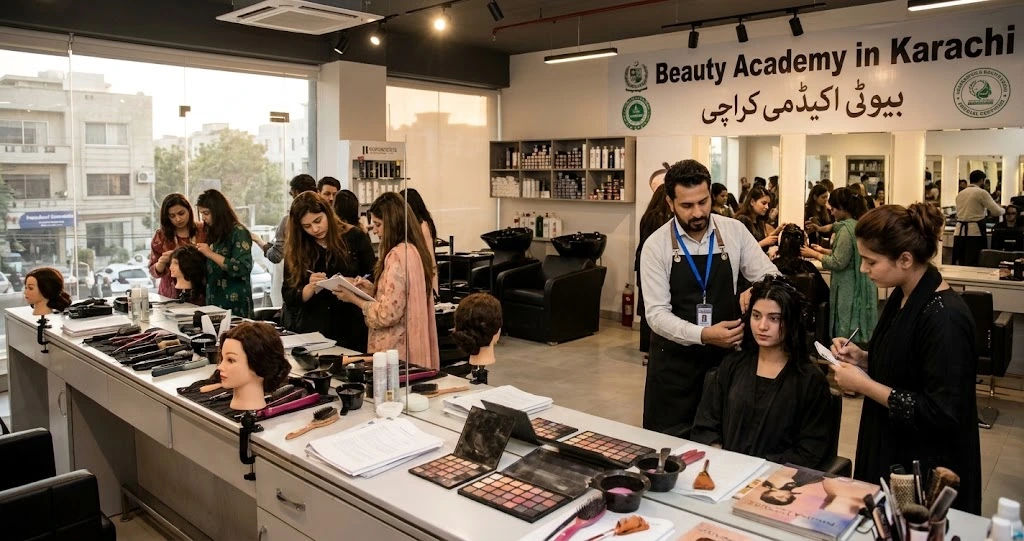 This is why practical training is an important part of professional beauty education.
A beauty academy in Karachi can provide students with opportunities to learn different beauty treatments through demonstrations, supervised practice, and hands-on activities. These learning experiences help beginners understand how professional beauty services are performed and how to work confidently with clients. From skincare and makeup to hairstyling and nail care, practical lessons can prepare students for real workplace responsibilities.
Whether someone wants to become a professional makeup artist, skincare specialist, hairstylist, or salon professional, choosing an academy that focuses on practical education can make a significant difference. Understanding the training process, available facilities, course structure, and career opportunities can help students make a better decision before enrolling.
Why Is Practical Training Important in Beauty Education?
Practical training is one of the most important elements of professional beauty education. It allows students to apply the knowledge they gain during classroom lessons. Instead of simply memorizing techniques, learners perform different treatments under the supervision of experienced instructors.
The beauty industry requires accuracy, creativity, patience, and attention to detail. These abilities develop through repeated practice rather than theoretical learning alone.
For example, a student learning facial treatments must understand skin types, product selection, cleansing methods, and massage techniques. Reading about these procedures is helpful, but performing them under professional supervision provides a much deeper understanding.
Practical education also helps students identify their mistakes and improve their performance before working with paying clients.
Developing Professional Skills
Students learn how to handle beauty tools, select appropriate products, and follow professional treatment procedures. These skills are necessary for providing safe and satisfactory services.
Regular practice also improves hand coordination and confidence. As students become familiar with different techniques, they can complete treatments more efficiently.
Real Salon Environments
A professional salon involves more than performing beauty treatments. Workers must communicate with customers, maintain cleanliness, organize equipment, and manage appointments.
Practical training introduces students to these responsibilities. It helps them understand the daily activities involved in working at a beauty salon or establishing their own business.
Does a Beauty Academy in Karachi Provide Hands-On Training?
Yes, many beauty training institutes offer hands-on learning as part of their educational programs. However, the amount and quality of practical training depend on the academy, course, instructors, and available facilities.
A good beauty academy in Karachi should provide a combination of theoretical lessons and practical demonstrations. Students should have opportunities to perform treatments themselves instead of only watching instructors.
Some institutes arrange individual practice sessions, while others organize group activities or supervised work on training models.
Before enrolling, students should ask how much time is dedicated to practical lessons and whether the course includes supervised practice.
Instructor Demonstrations
Training often begins with demonstrations by experienced instructors. They explain each procedure step by step and show students how professional techniques are performed.
For example, during a makeup lesson, an instructor may demonstrate skin preparation, foundation application, contouring, eye makeup, and finishing techniques.
Students observe the process and learn about the products and tools used at each stage.
Supervised Student Practice
After demonstrations, students practice the techniques themselves. Instructors observe their work and provide corrections where necessary.
This process helps learners understand which techniques they are performing correctly and where improvement is needed.
Supervised practice is particularly useful for beginners because it reduces the chances of developing incorrect habits.
Types of Practical Training Offered by Beauty Academies
Beauty education includes several specializations. Students can choose courses according to their interests and career goals.
The available subjects vary between institutes, so it is important to review the course outline before making a decision.
Professional Makeup Training
Makeup is one of the most popular areas of beauty education. Practical makeup lessons help students develop the techniques needed for different occasions and customer requirements.
Students may learn:
-
Basic and advanced makeup application.
-
Foundation matching and skin preparation.
-
Eye makeup and eyeliner techniques.
-
Contouring and highlighting.
-
Bridal and party makeup.
-
Natural and everyday makeup.
-
Makeup product selection.
-
Makeup tools and brush hygiene.
During practical sessions, students may work on practice models or training partners. This experience helps them understand how makeup techniques differ according to facial features, skin types, and personal preferences.
Skincare and Facial Treatments
Skincare training introduces students to basic skin knowledge and professional facial procedures.
Students may learn how to identify different skin types, understand common skin concerns, and select suitable skincare products.
Practical lessons can include:
-
Skin cleansing procedures.
-
Facial massage techniques.
-
Exfoliation methods.
-
Face masks and moisturization.
-
Basic facial treatments.
-
Product application techniques.
-
Client consultation.
A professional course should also explain when a beauty treatment is unsuitable and when a customer should seek advice from a qualified healthcare professional.
Hair Cutting and Styling
Hair training is another important part of beauty education. Students learn how to work with different hair textures, lengths, and styles.
Practical sessions may include shampooing, conditioning, blow-drying, basic cutting, straightening, curling, and styling.
Students also learn how to handle professional hair tools safely.
Regular practice helps learners improve their cutting accuracy and develop the creativity needed to create different hairstyles.
Nail Care and Nail Art
Nail services are becoming an important part of the beauty industry. Many training programs introduce students to basic manicure and pedicure procedures.
Students may practice nail shaping, cuticle care, polishing, nail art, and the application of different nail products.
They also learn about tool sanitation and proper hygiene.
Advanced courses may introduce artificial nail applications and decorative techniques, depending on the institute's facilities.
How Are Practical Classes Usually Conducted?
Practical lessons generally follow a structured learning process. Students first receive an explanation of the procedure and then observe an instructor demonstrating the technique.
After understanding the basic steps, they practice under supervision.
A typical practical class may involve the following activities:
-
Introduction: The instructor explains the treatment and its purpose.
-
Demonstration: Students observe the correct procedure.
-
Preparation: Learners arrange products, tools, and equipment.
-
Practice: Students perform the technique themselves.
-
Feedback: The instructor identifies mistakes and suggests improvements.
-
Assessment: Students demonstrate what they have learned.
This approach allows learners to develop their abilities gradually.
A well-organized beauty academy in Karachi should provide enough practice opportunities for students to become comfortable with different treatments.
What Facilities Should Students Expect?
Training facilities play an important role in the quality of beauty education. Students need suitable equipment and a clean environment to practice professional techniques.
Before choosing an institute, it is helpful to visit the premises and observe the classrooms.
Professional Beauty Equipment
A training institute should provide equipment related to the courses it offers.
For example, makeup students may need professional brushes, mirrors, makeup stations, and suitable lighting.
Hairdressing students require access to styling tools, hair-washing facilities, and appropriate cutting equipment.
Skincare students may need facial beds, towels, skincare products, and other treatment supplies.
Students should ask whether these materials are included in the course fee or whether they must purchase them separately.
Clean and Hygienic Training Areas
Hygiene is essential in the beauty profession. Students must understand how to clean and disinfect reusable equipment and maintain sanitary workstations.
A suitable training environment should have clean surfaces, properly stored products, fresh towels, and appropriate waste-disposal arrangements.
Instructors should explain hygiene procedures and make sure students follow them during practical sessions.
Suitable Practice Space
Students need enough space to perform treatments comfortably.
Overcrowded classrooms may limit individual practice opportunities. Therefore, it is useful to ask about class sizes and the number of students assigned to each instructor.
Smaller practical groups can make it easier for instructors to provide individual guidance.
How Do Instructors Help Students During Practical Training?
Qualified instructors play an important role in developing professional beauty skills. Their experience and teaching methods can influence how effectively students learn.
A good instructor does not simply demonstrate techniques. They explain why particular methods are used and help students understand how to improve their performance.
Individual Guidance
Every student learns at a different speed. Some may understand makeup techniques quickly, while others may need additional practice with hairstyling or skincare procedures.
Experienced instructors identify these differences and provide suitable guidance.
Individual feedback helps students correct mistakes before they become regular habits.
Correcting Technical Mistakes
Practical learning involves making mistakes. For example, a beginner may apply foundation unevenly, use unsuitable hair tools, or perform a facial massage incorrectly.
Instructors explain what went wrong and demonstrate the correct method.
This feedback encourages students to improve instead of becoming discouraged.
Building Professional Confidence
Many beginners feel nervous when performing beauty treatments on another person.
Regular supervised practice helps reduce this hesitation. Students gradually become more comfortable communicating with clients and performing different procedures.
Confidence is especially important for people who want to work independently or provide professional beauty services.
Can Beginners Join Beauty Practical Training Courses?
Yes, many beauty training programs are designed for beginners who have little or no previous experience.
Students do not necessarily need professional beauty knowledge before enrolling in an introductory course.
A suitable beginner program starts with basic concepts and gradually introduces more advanced techniques.
Starting With Basic Techniques
Beginners usually learn about personal hygiene, beauty tools, product knowledge, skin preparation, and basic treatment procedures.
Once they understand these foundations, they can move toward more specialized skills.
Learning at a Comfortable Pace
Students should avoid choosing advanced courses before developing basic abilities.
For example, someone interested in bridal makeup should first understand foundation application, color matching, facial preparation, and basic eye makeup.
A step-by-step learning approach makes advanced techniques easier to understand.
How Long Does Practical Beauty Training Take?
The duration of beauty training depends on the course and the level of specialization.
Short courses may focus on one particular skill, while comprehensive diplomas may cover several beauty subjects.
For example, a basic makeup course may take a few weeks or months, depending on the schedule and number of practical sessions.
Advanced programs can require additional time because students must develop greater technical knowledge and complete more practice assignments.
Before enrolling, students should ask about:
-
Total course duration.
-
Number of weekly classes.
-
Practical training hours.
-
Instructor supervision.
-
Assessment requirements.
-
Certificate eligibility.
-
Opportunities for additional practice.
It is important to understand that completing a course does not automatically make someone an expert. Professional ability develops through continued practice and experience.
How Can Students Choose the Right Beauty Academy in Karachi?
Selecting the right institute is an important decision because training quality can affect future career opportunities.
Students should compare several factors rather than choosing an academy based only on advertisements or low fees.
Check the Course Curriculum
A clear course outline helps students understand what they will learn.
It should explain the theoretical subjects, practical activities, training hours, and assessment methods.
Students should also check whether the program matches their preferred specialization.
Research Instructor Experience
Experienced instructors can provide valuable professional knowledge.
Ask about their qualifications, practical experience, and teaching background.
It is also helpful to understand whether students receive individual supervision during practical lessons.
Visit the Academy
Visiting the institute can provide a better understanding of its facilities.
Observe the cleanliness of classrooms, availability of equipment, and general learning environment.
If possible, ask whether prospective students can observe a demonstration or introductory class.
Compare Course Fees
Training fees can vary according to course duration, equipment, products, and teaching arrangements.
Students should request a complete fee breakdown before admission.
Ask whether registration charges, examination fees, certificates, and practical materials are included.
An affordable course is useful, but practical training quality should remain a major consideration.
Read Student Reviews
Reviews from former students can provide useful information about teaching quality and the learning environment.
Look for feedback about practical sessions, instructor support, equipment, and overall student satisfaction.
Avoid relying entirely on promotional claims.
What Career Opportunities Are Available After Practical Training?
Beauty education can create several career opportunities for individuals who develop professional skills and gain sufficient experience.
The right career path depends on personal interests, practical ability, and the specialization selected.
Professional Makeup Artist
Students who develop strong makeup skills may work with individual clients, bridal parties, photographers, or event organizers.
Some makeup artists also provide home-based services or establish their own businesses.
A portfolio containing different makeup looks can help demonstrate their abilities to potential customers.
Skincare Specialist
Students interested in skincare may explore opportunities in beauty salons and suitable skincare service environments.
They can provide services within their training and professional scope.
They must understand the importance of hygiene, product selection, and recognizing situations that require medical attention.
Hair Stylist
Hair styling offers opportunities in salons, beauty studios, and freelance services.
Professionals can specialize in haircuts, styling, blow-drying, or other techniques according to their training.
Continued practice is important because hair trends and customer preferences change over time.
Nail Technician
Students who enjoy detailed creative work may choose nail care and nail art as a career.
They can work in salons or offer independent services after developing suitable skills and maintaining proper hygiene standards.
Starting a Beauty Business
Some graduates may eventually establish their own beauty studios or home-based services.
However, running a business requires more than technical ability.
Business owners must also understand customer service, pricing, budgeting, marketing, appointment management, and professional responsibilities.
Practical training can provide a foundation, while additional business knowledge supports long-term growth.
Common Mistakes Students Should Avoid
Students can make better decisions by understanding the mistakes that sometimes occur during beauty education.
One common mistake is choosing an institute without checking its practical training arrangements. Watching demonstrations alone may not provide enough experience to develop professional skills.
Another mistake is ignoring hygiene procedures. Clean tools and safe working practices are essential for protecting clients and maintaining professional standards.
Some students also expect immediate employment after completing a short course. In reality, employers and customers often look for practical ability, reliability, communication skills, and experience.
Finally, students should not purchase expensive beauty equipment without understanding which products and tools are necessary for their selected specialization.
Tips for Getting the Most From Practical Beauty Training
Students can improve their learning experience by developing consistent study and practice habits.
First, attend classes regularly. Missing practical sessions can make it difficult to understand procedures that depend on earlier lessons.
Second, practice techniques outside class when appropriate and under safe conditions. Repetition helps improve accuracy and confidence.
Third, ask instructors questions whenever a procedure is unclear. Understanding the reasons behind each step is more useful than memorizing instructions.
Students should also maintain a record of their progress. Photographs of permitted practice work, written notes, and instructor feedback can help them identify improvements.
Building a professional portfolio is another useful activity. It allows future clients and employers to see the techniques a student can perform.
Most importantly, remain patient. Developing professional beauty skills takes time, dedication, and consistent effort.
Conclusion
Practical training is an essential part of professional beauty education because it helps students turn theoretical knowledge into useful workplace skills. Many beauty institutes provide hands-on learning opportunities through demonstrations, supervised practice, and skill assessments. However, the quality and availability of these facilities can differ from one institution to another.
Choosing a suitable beauty academy in Karachi requires careful research. Students should examine the course curriculum, instructor experience, practical training hours, available equipment, classroom facilities, and hygiene standards before making their decision.
Whether someone wants to become a makeup artist, skincare specialist, hairstylist, or nail technician, regular practice can help develop the confidence and technical abilities required in the beauty industry. Beginners can also benefit from structured courses that introduce basic techniques before moving toward advanced treatments.
It is equally important to remember that professional success does not depend on receiving a certificate alone. Students must continue practicing, improving their skills, learning new techniques, and understanding customer expectations.
Ultimately, an institute that combines theoretical knowledge with meaningful practical experience can provide a strong starting point for a beauty career. By selecting the right training program and remaining committed to learning, students can build valuable skills and explore rewarding opportunities in Karachi's beauty industry.